
-
How to Introduce Yourself in Spanish
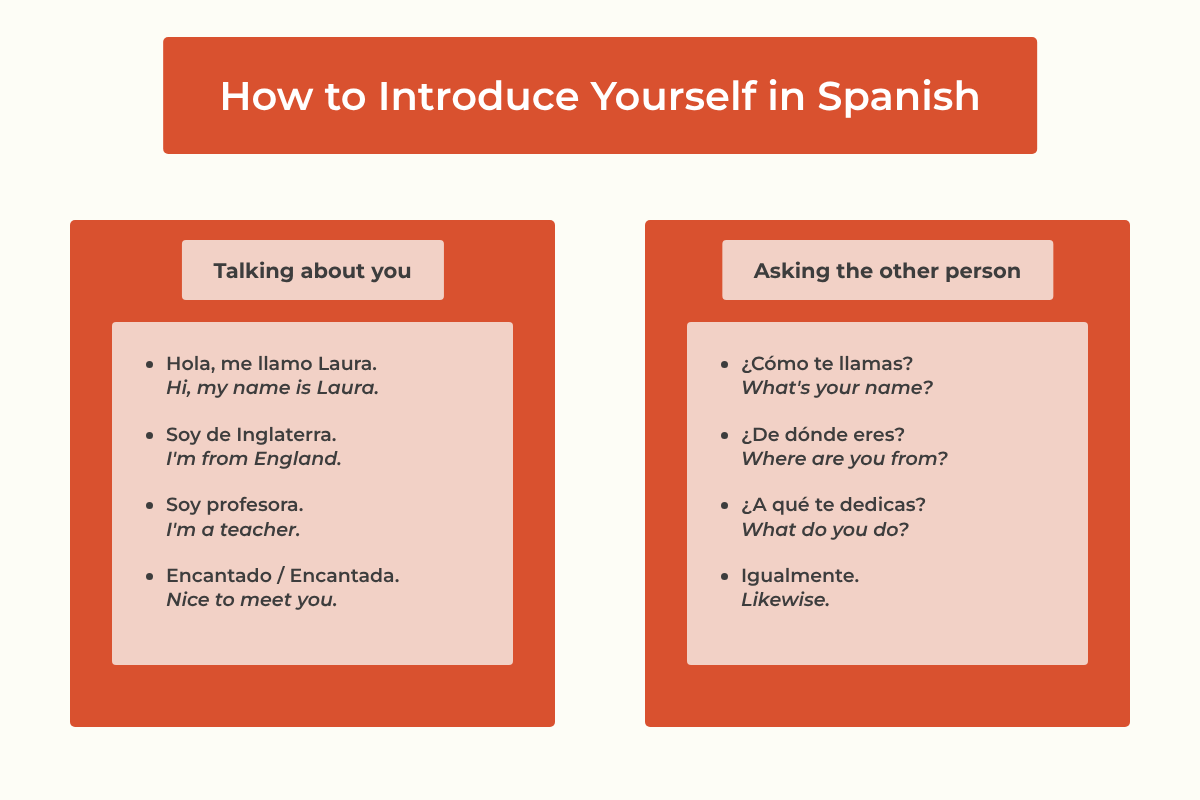
To introduce yourself in Spanish, say hola, give your name with me llamo or soy, and finish with encantado (or encantada if you are a woman), which means “nice to meet you”. Put together, it sounds like this.Hola, me llamo Laura. Encantada. Hi, my name is Laura. Nice to meet you. That short sentence is…
-
Saber vs Conocer: Two Ways to Say “To Know”
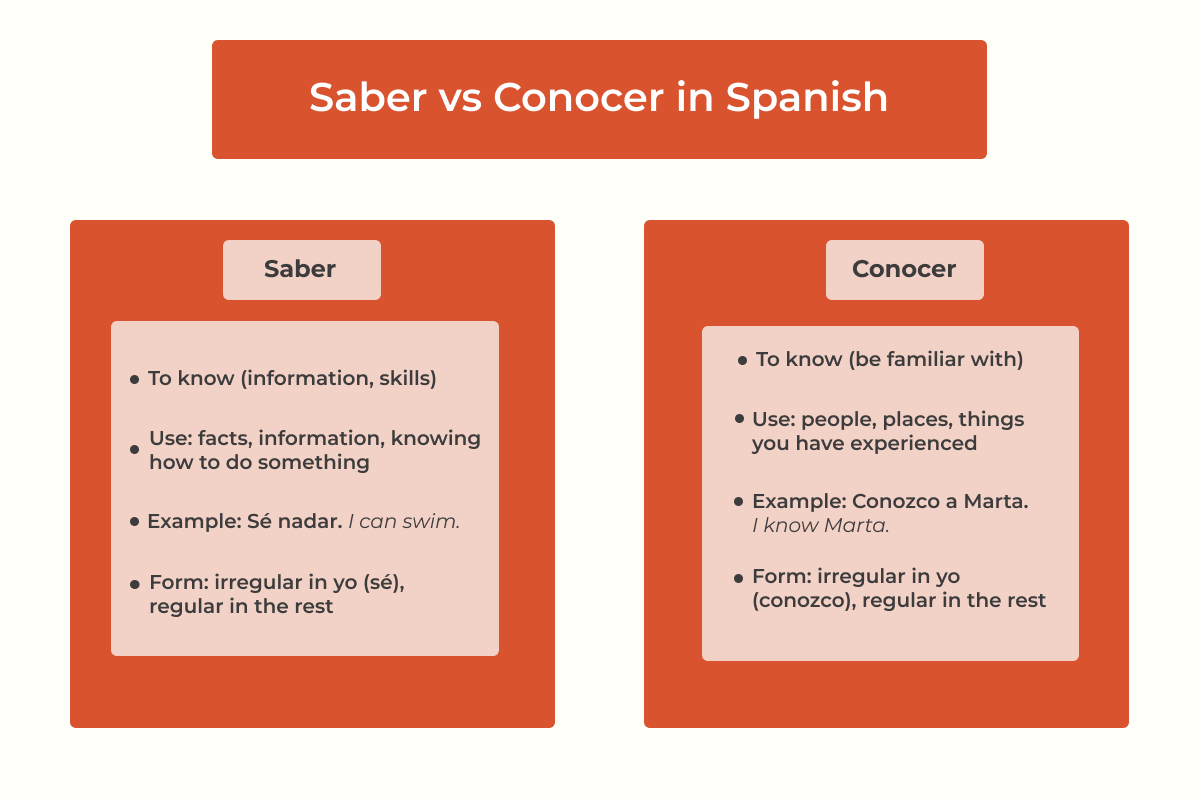
Spanish has two verbs that mean “to know”: saber and conocer. Saber is used for facts, information and skills, and conocer for people, places and things you know from experience. For example, Sé dónde está Bilbao means “I know where Bilbao is”, while Conozco Bilbao means “I know Bilbao”, because you have been there. Since…
-
Preterite vs Imperfect in Spanish: How to Choose the Right Past Tense
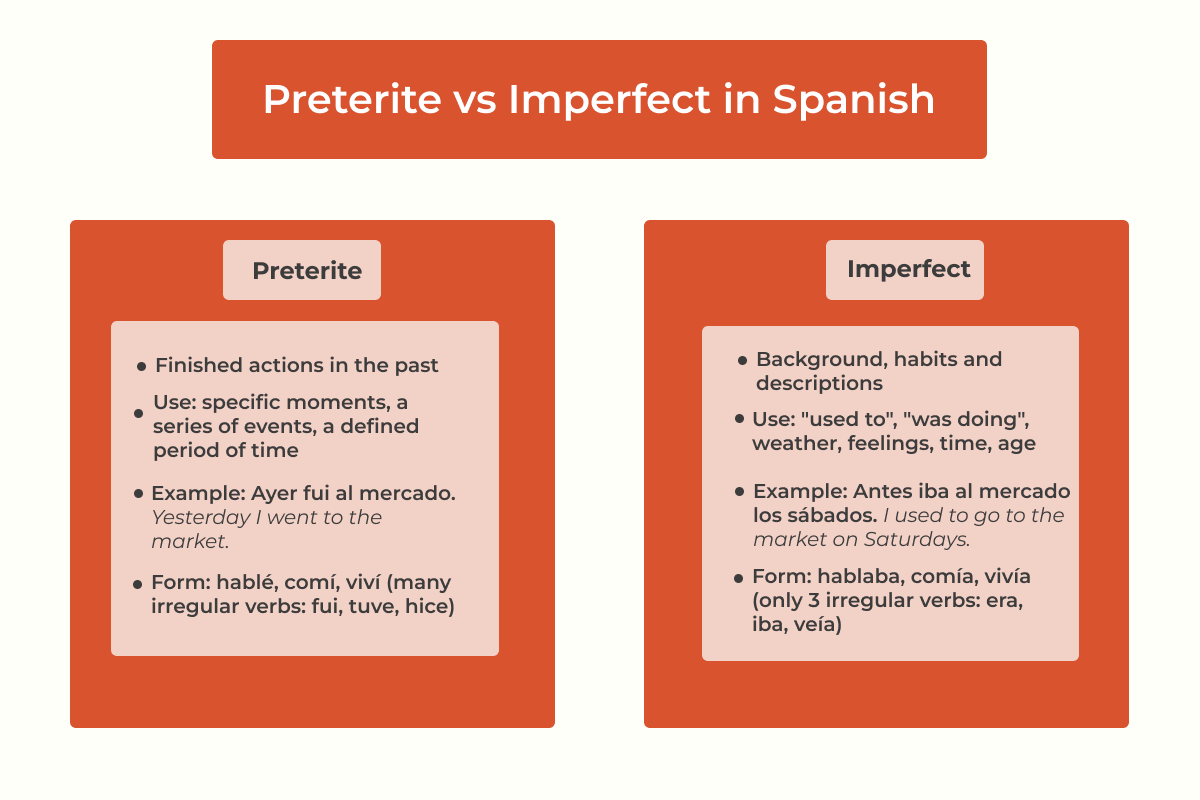
If you have started telling stories in Spanish, you have probably noticed that there are two ways to talk about the past, and that choosing between them is not always easy. To put it simply, we use the preterite for actions that happened and finished at a specific moment, and the imperfect for the background:…
-
Por vs Para in Spanish: What’s the Real Difference?
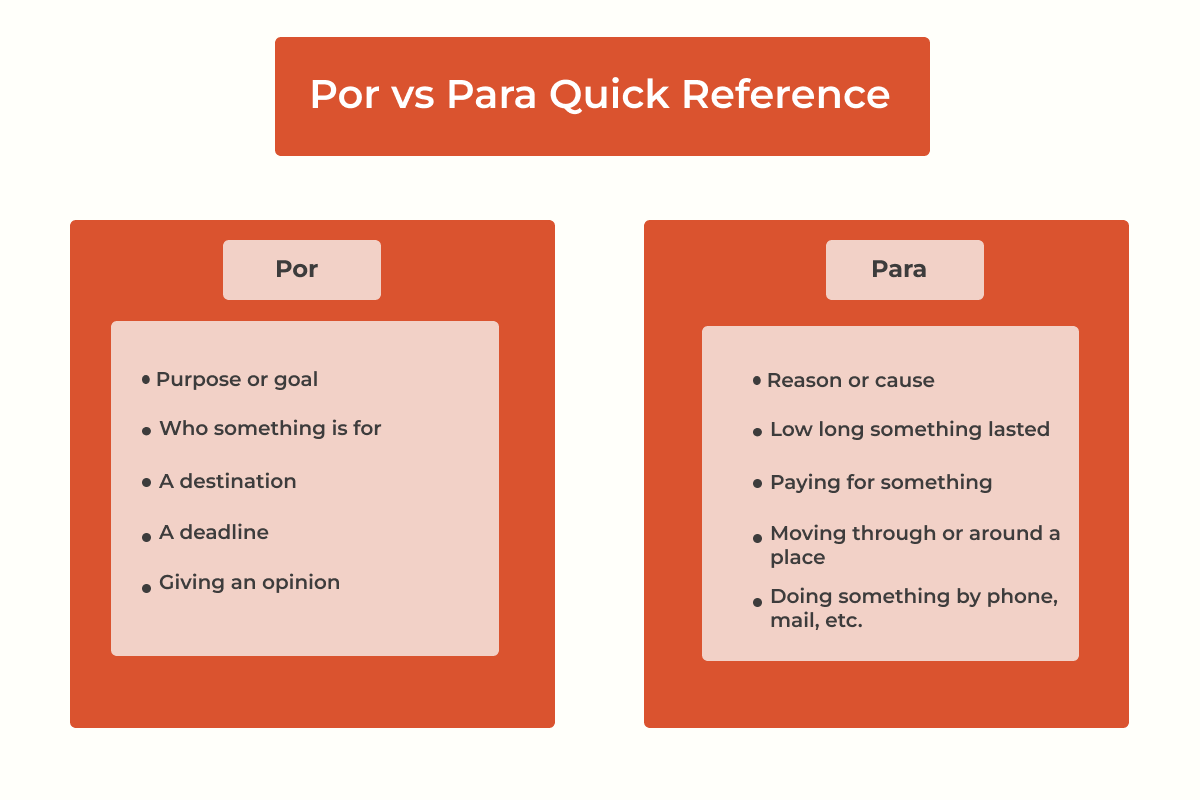
Por and para are two of the most confusing words for anyone learning Spanish, and it’s easy to see why. In English, “for” covers a huge range of meanings, and Spanish splits all of that into two different words. Para is about where something is going, its purpose, or a point in time. Por is…
-
Spanish Food Vocabulary: From Tapas to Paella
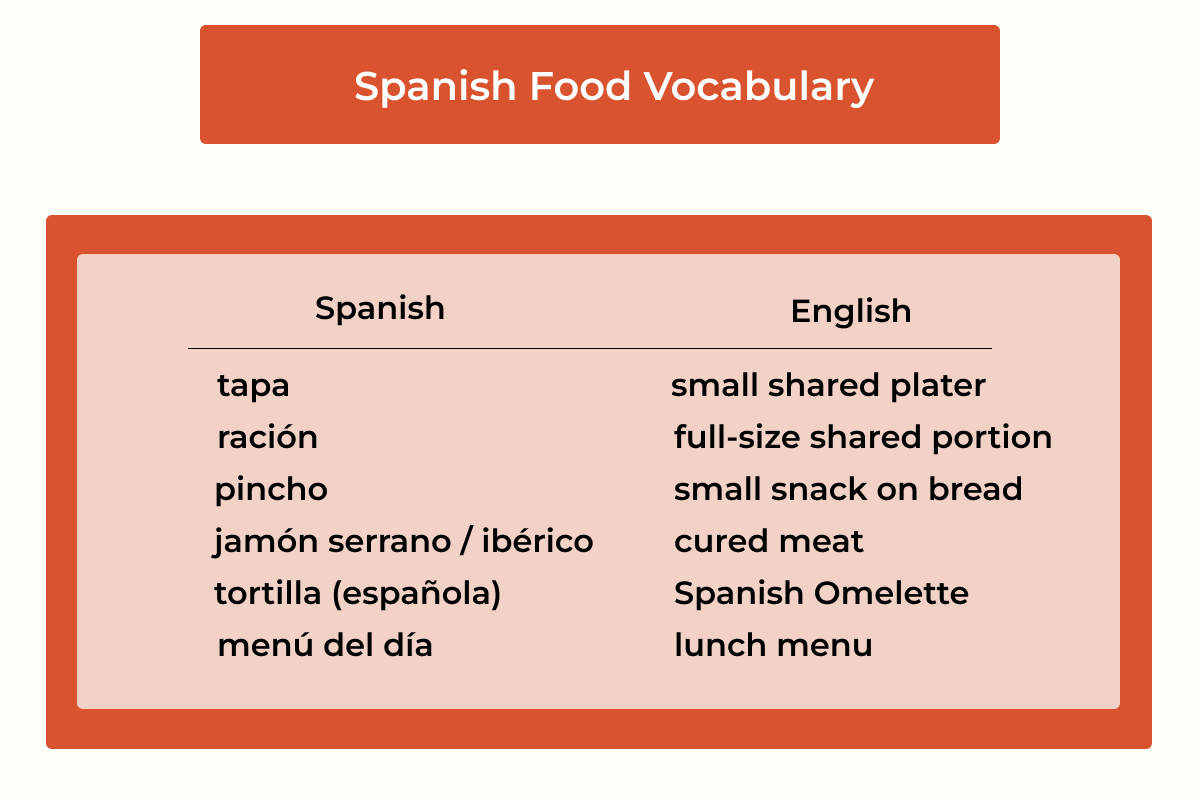
If you’re planning a trip to Spain, or you just love Spanish food and want to talk about it properly, the vocabulary you learn in a textbook often doesn’t match what you’ll actually hear in a bar or see on a menu. I grew up in Madrid, and food is one of those areas where…
-
How to Improve Your Spanish Pronunciation: Tips for Beginners

Learning the pronunciation rules is an important first step, but many beginners quickly discover that knowing the rules and speaking naturally are two different things. Maybe you’ve learned that the h is silent or that b and v sound the same in Spanish, yet conversations still feel challenging. That’s completely normal. Good pronunciation is about…
-
Top 10 Must-Know Spanish Idioms (and Their Real Meanings)
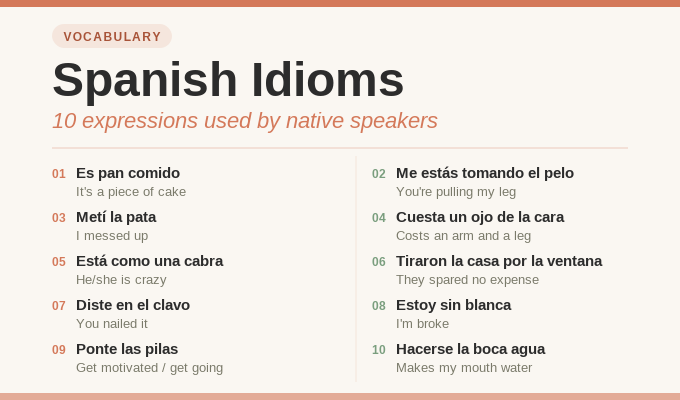
Learning Spanish isn’t just about grammar and vocabulary, it’s also about understanding how native speakers really communicate. One of the most fun parts of Spanish is its idioms, or expresiones idiomáticas. These phrases don’t translate literally, but they are widely used in everyday conversation. What Are Spanish Idioms? Spanish idioms (called “expresiones idiomáticas”) are phrases…
-
Spanish Slang You’ll Hear in Spain

If you learn Spanish from books or apps, you might be surprised when you hear people speaking in Spain. Locals use a lot of informal words and expressions that do not always appear in textbooks. Learning some common Spanish slang will help you understand real conversations and sound more natural. Below you’ll find some of…
-
Spanish Present Tense for Beginners
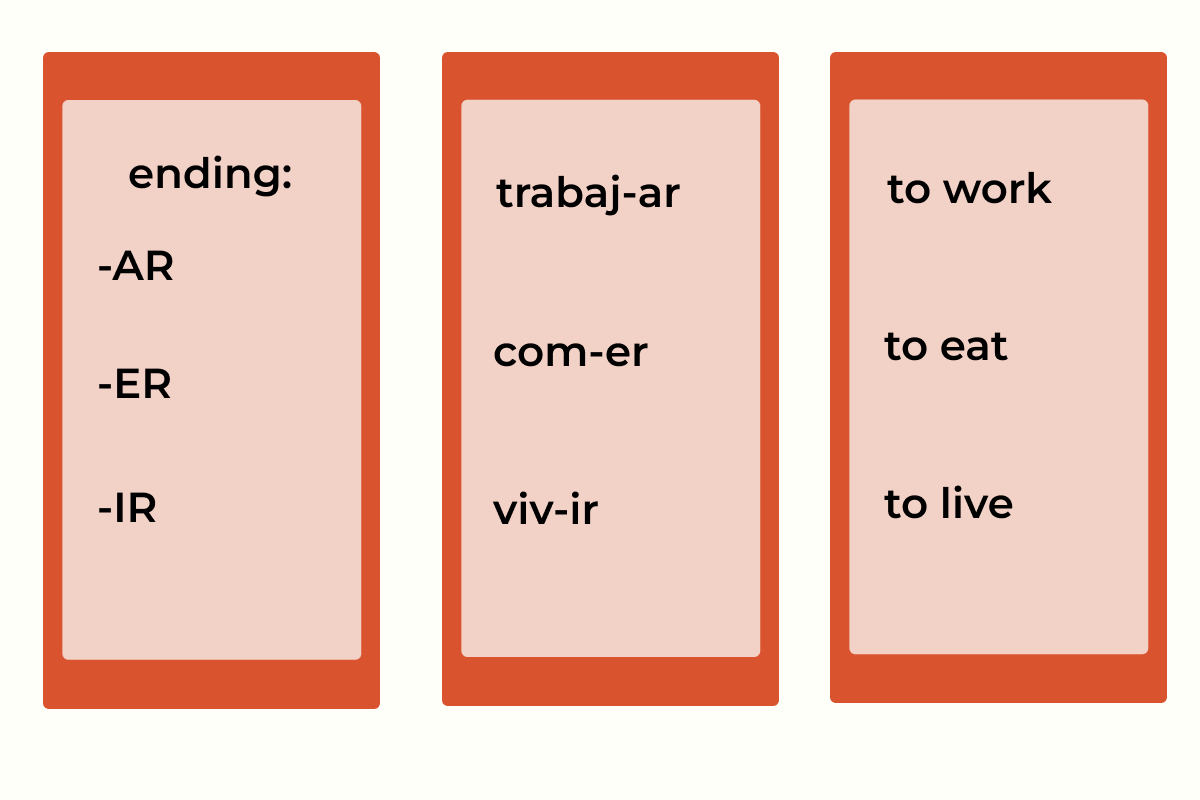
What is the Present Tense in Spanish? The present tense in Spanish (presente del indicativo) is used to describe what happens now, what happens regularly, or what is generally true. It is one of the most common tenses in Spanish and the first one you should learn when starting to speak the language. Examples: How…
-
Top 20 Irregular Spanish Verbs and How to Use Them

What Are Irregular Verbs in Spanish? In Spanish, irregular verbs are verbs that don’t follow the regular conjugation patterns.That means their endings or stems change when you conjugate them.They’re very common in daily conversations, so learning them early will make your Spanish sound much more natural. Here are the 20 most important irregular verbs you’ll…