
Learning the pronunciation rules is an important first step, but many beginners quickly discover that knowing the rules and speaking naturally are two different things.
Maybe you’ve learned that the h is silent or that b and v sound the same in Spanish, yet conversations still feel challenging. That’s completely normal. Good pronunciation is about more than individual letters; it’s also about rhythm, confidence, and building habits that make speaking feel more natural.
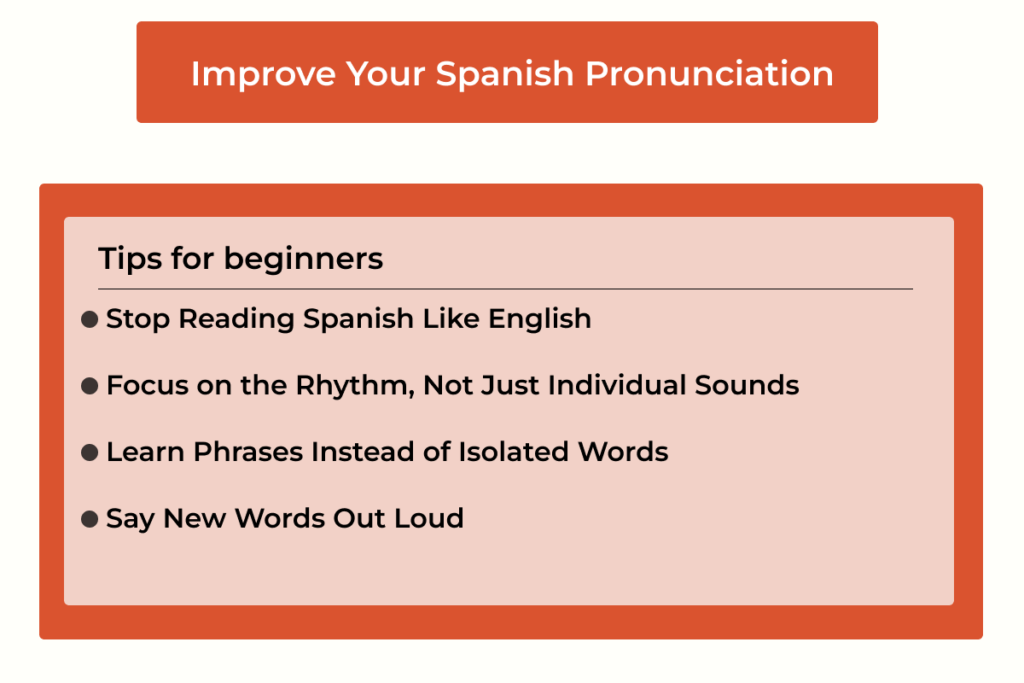
Here are some practical ways to improve your Spanish pronunciation without getting overwhelmed.
Stop Reading Spanish Like English
One of the biggest challenges for English speakers is automatically applying English pronunciation rules to Spanish words.
Take words like hospital, animal, doctor, or popular. They may look familiar, but they don’t sound the same in Spanish. It’s easy to fall into the habit of pronouncing them as you would in English simply because the spelling is similar.
When you learn a new word, pause for a moment before saying it. Think about how a Spanish speaker would pronounce it rather than relying on your first instinct. It might feel slower at first, but this small habit helps prevent pronunciation mistakes from becoming permanent.
Focus on the Rhythm, Not Just Individual Sounds
Many beginners spend a lot of time practising difficult sounds, but rhythm is just as important.
English tends to stress certain syllables while reducing others. Spanish, on the other hand, gives most syllables a similar amount of time. That’s one of the reasons it sounds so smooth and flowing.
Try reading a sentence like this aloud:
Quiero aprender español porque me gusta viajar.
Instead of rushing through the shorter words, keep a steady rhythm from beginning to end. It may sound unusual at first, but it will make your Spanish sound much more natural.
Learn Phrases Instead of Isolated Words
If you’ve ever memorised vocabulary lists, you’ve probably practised words one by one. While that’s useful, real conversations don’t work that way.
Instead of learning words on their own, learn them as part of a phrase.
For example:
- Tengo hambre.
- Mucho gusto.
- ¿Qué hora es?
- No entiendo.
You’ll improve your pronunciation while also becoming more comfortable using these expressions in everyday conversations.
Understand Why Native Speakers Sound So Fast
A common complaint among beginners is that native speakers talk too quickly.
In reality, Spanish isn’t necessarily much faster than English. It simply sounds that way because words are linked together smoothly and speakers don’t pause between every word.
For example, when someone says:
¿Cómo estás?
You’ll often hear it as one continuous phrase rather than two separate words.
The more you expose yourself to natural Spanish, the easier it becomes to recognise these patterns.
Say New Words Out Loud
Reading silently is helpful for building vocabulary, but pronunciation improves when you actually use your voice.
Whenever you learn a new word, say it aloud a few times before moving on. Then use it in a simple sentence.
For example, if you’ve just learned the word biblioteca, don’t stop there. Try saying:
“La biblioteca está cerca de mi casa.”
Using new vocabulary in context helps reinforce both its pronunciation and its meaning.
Don’t Let Difficult Sounds Hold You Back
Some Spanish sounds take longer to master than others. Many learners spend months trying to perfect the rolled r, while others find ñ or the Spanish j challenging.
Don’t let these sounds stop you from speaking.
Most native speakers will understand you even if your pronunciation isn’t perfect, especially if the rest of your speech is clear. As you gain more experience, these sounds usually become easier through regular exposure and practice.
Notice Your Own Pronunciation Habits
Everyone has pronunciation habits influenced by their native language.
Perhaps you pronounce the h in every word because you’re used to English, or maybe you place the stress on the wrong syllable in longer words.
Instead of trying to fix everything at once, choose one habit to work on for a week. Small improvements are easier to maintain, and over time they make a noticeable difference.
Keep Improving
Improving pronunciation takes time, so don’t worry if it doesn’t sound perfect yet. The more you use Spanish, the more natural it will feel. Just try to be clear and keep going.
If you want to go back and check the basics, you can always revisit our Spanish Pronunciation Guide.